

Welcome to the private equity era
Utah has broken the seal. What comes next?

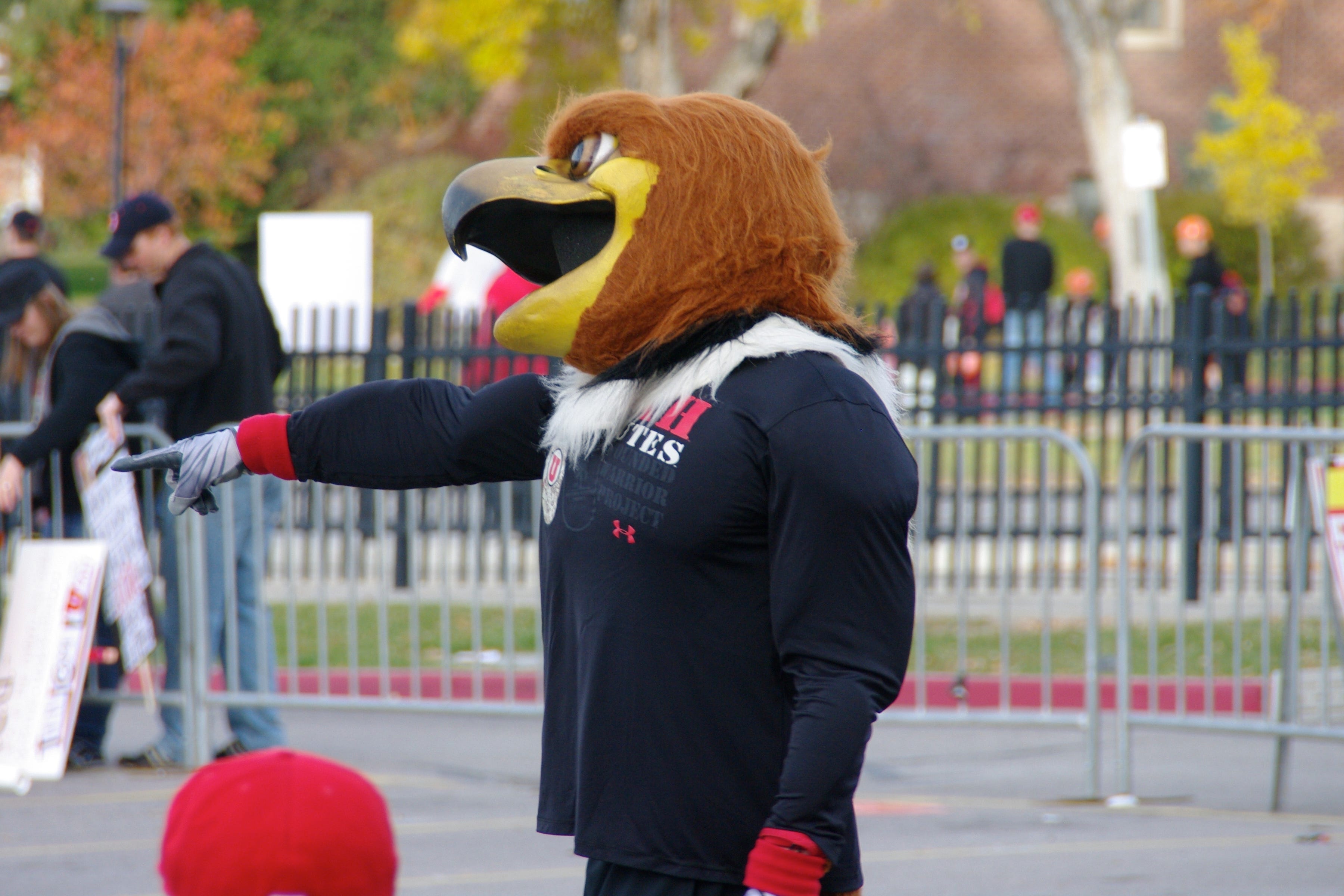
Yet another era has started for college football: The private equity era. After the Big Ten floated a deal that has yet to come to fruition, the Big 12 has pursued a similar deal of their own. The first deal has officially gone through, with the University of Utah signing a pact with private equity firm Otro Capital.
This isn’t the first time we’ve talked private equity deals here. We covered the Big Ten’s deal, and an overview of private equity when it was first trying to break onto the scene. But this is different. Now we have an actual deal to look at and a guidepost for universities and conferences to compare their deals to in the future.
More on Private Equity:


The Deal
On the surface, like many of these seismic college football moves we’ve seen since the founding of this newsletter nearly three years ago, this is a simple deal. Utah has partnered with Otro Capital for a deal that is estimated to bring around $500 million into their athletic department.
But nothing is simple, is it?
To facilitate this deal, Utah is spinning a portion of their athletic department off into Utah Brands & Entertainment, LLC, which is owned primarily by the University of Utah Foundation. This new company is what Otro is investing into, not the overall athletic department.
Luckily for us, Utah president Taylor Randall and athletic director Mark Harlan penned an open letter to fans explaining the move, so we don’t have to delve through so much subterfuge to get to the bottom of what’s going on here.
According to Randall and Harlan, Utah Brands & Entertainment, LLC will focus on further growing the “University of Utah brand” by “overseeing, optimizing and enhancing the fan experience, corporate sponsorships, ticketing, event-related revenues and campus-wide university trademarks and licensing.”
The new company will be chaired by Harlan and the university’s foundation will appoint “a majority” of the board of directors. Reading between the lines, I assume Otro Capital will have a seat on the board of directors due to their financial investment.
More importantly to most outside observers, Randall and Harlan made it very clear that Utah “is not selling parts of our Athletics Department, ceding operational control to a third party or relinquishing control of any facilities.”
The deal includes a five to seven year exit opportunity and the university maintains the ability to buy out Otra Capital’s stake in the new LLC. Otra Capital will receive a yet unknown percentage of the company’s annual revenue.
Why make the deal?
At this point, the budgetary concerns raised by the House settlement and subsequent payments, paired with ballooning coaching costs and student enrollment decreasing across the nation have athletic departments scrambling to find new revenue streams.
We’ve seen multiple other schools break off the athletic department to try to find more revenue away from siphoning cash away from the rest of the university. Kentucky was the first to make the move to separate the entire athletic department into a separate LLC, which seems to be the model Utah is following, just with keeping most of the actual operational pieces of the department under the university’s umbrella.
The why behind this deal is as simple as it comes: it gives Utah the least invasive access to a new revenue stream. Otro Capital gets a seat at the table, but reporting around the deal has made it clear that Utah retains all the power on how the athletic department is run, from scheduling to facility management to coaching contracts and everything else.
Ultimately, the Utes likely had to choose between the two main revenue generation methods we’ve seen pop up recently: a private equity deal like this or expand fees.
Student fees are growing across the nation, and some schools are increasing fees to supplement their athletic department. Now, before you get your pitchforks out, I don’t konw of any institution that competes at the NCAA level regardless of division that doesn’t have some form of mandatory athletic fees. I attended two Mid-American Conference schools - both had mandatory athletic fees. I’ve worked in financial aid and billing for a NJCAA junior college - it had mandatory “recreation fees” that supported the small athletic department and facility upkeep.
James Madison is making a lot of news, not just for becoming the second Group of Six school in the playoff field this year, but because of their astronomical athletic fees that support the Dukes. A student at James Madison pays $2,456 per semester in support of the athletic department. That’s not even the highest in Virginia, as FCS program VMI takes the cake at $4,186 per student. If we put that into perspective, a JMU student’s $2,456 fee payment per semester is more than four times the amount a student that attended all of the other 11 CFP entrants would pay.
James Madison is, understandably, taking a lot of heat for passing along the cost to all university students. Utah could’ve gone that route, but decided to go with this instead.
And yes, you can always try to get more donors. That’s the easy solution to any of these problems. Except that’s not easy, as any Division I school will already have a dedicated wing of the athletic department focused on finding and activating those donors to boost the budget. But you can only go back to that well for so long and most schools don’t have a Cody Campbell to call on.
Reaction and fallout
Admittedly, I’m a bit surprised as to how loud both sides are on this, decrying it as the worst thing to ever happen to college athletics, while some praise it as the bold step into the future.
For what it’s worth, NCAA president Charlie Baker called Utah’s deal a “really well-thought-out and really well-designed” move at Sport Business Journal’s Intercollegiate Athletics Forum. He specifically pointed to Utah maintaining all operational control and keeping Otro Capital on for a set period of time instead of taking a down payment up front.
Others are pointing to deals like this as a band-aid for a growing spending problem, saying that universities shouldn’t be pursuing deals like this to be fiscally responsible, but should instead be looking at how to balance their budgets.
The one reaction that caught my attention was from Rep. Michael Baumgartner (R-Washington), who filed the Protect College Sports from Private Equity and Foreign Influence (PROTECT) Act in October. Baumgartner, who you can tell is against the idea from his bill’s name, floated the idea that Congress should take a look at the tax exempt status of schools making deals with private equity corporations.
Which makes sense. Why does Utah Brands & Entertainment, LCC get the benefits of being tax exempt when it’s not a non-profit institution, but instead a for-profit, possibly publicly traded company? After all, the idea that Utah donors and boosters could purchase shares of the new company has been confirmed by CBS Sports’s Carter Bahns.
If that came to pass, it would be yet another massive overhaul to athletic departments across the nation that would throw almost everyone making these deals into a nasty budgetary nebulous phase that would certainly threaten the department as a whole.
More immediately, the PROTECT Act is being actively worked on by the House Education and Workforce Committee, though there is no time frame for when the bill could be advanced. The bill seeks to amend the Title IV Program Participation Agreement to prohibit private equity firms from investing into athletic departments and conferences. It does allow exemptions for donor gifts, routine marketing sponsorships and traditional bank loans, provided there is no media rights or control included.
Obviously, as with any bill, we’ll be talking about and potentially hearing about this for years. The SCORE Act, after all, is still on the table.
More immediately, the question turns to is anyone going to follow Utah’s path? And I think the answer is most assuredly yes. College athletics is a copycat game. All it takes is one - especially with a deal that earns the praise of the NCAA president - to open the floodgates. I wouldn’t be surprised to see the conference-wide deals the Big Ten and Big 12 have been working on get approval in the coming weeks.
But there’s also a lot of unknowns here. Will other schools fight to maintain full control like Utah? Will a conference like the Big Ten potentially give the boot to members that don’t sign on? Will private equity firms try to exact more control and more revenue and strong-arm schools into poor deals?
Concerns are valid. But, looking deeper than the headlines, it seems like Utah did their homework. This is a solid deal to bring some cash to athletic department. But, make no mistake, they did open Pandora’s Box that may create more problems than solutions.
Have any questions, ideas, article pitches, or information? With the new Substack features, you can directly message me! Hit the button below to send me a message, or reach out via email to griffin@sid-sports.com, or find us on your favorite social media platform like Facebook, Instagram, Substack Notes and Bluesky.
I heard the JMU fees were high but those are stomach-churning figures. $20k in athletics fees for four years?! I hope they have a hell of a student gym and also let recent grads come back for a decade. Also masseuses for all students. Also in-dorm ice baths.