

Is that...regulation?!
How three cases are going to shape regulation going forward

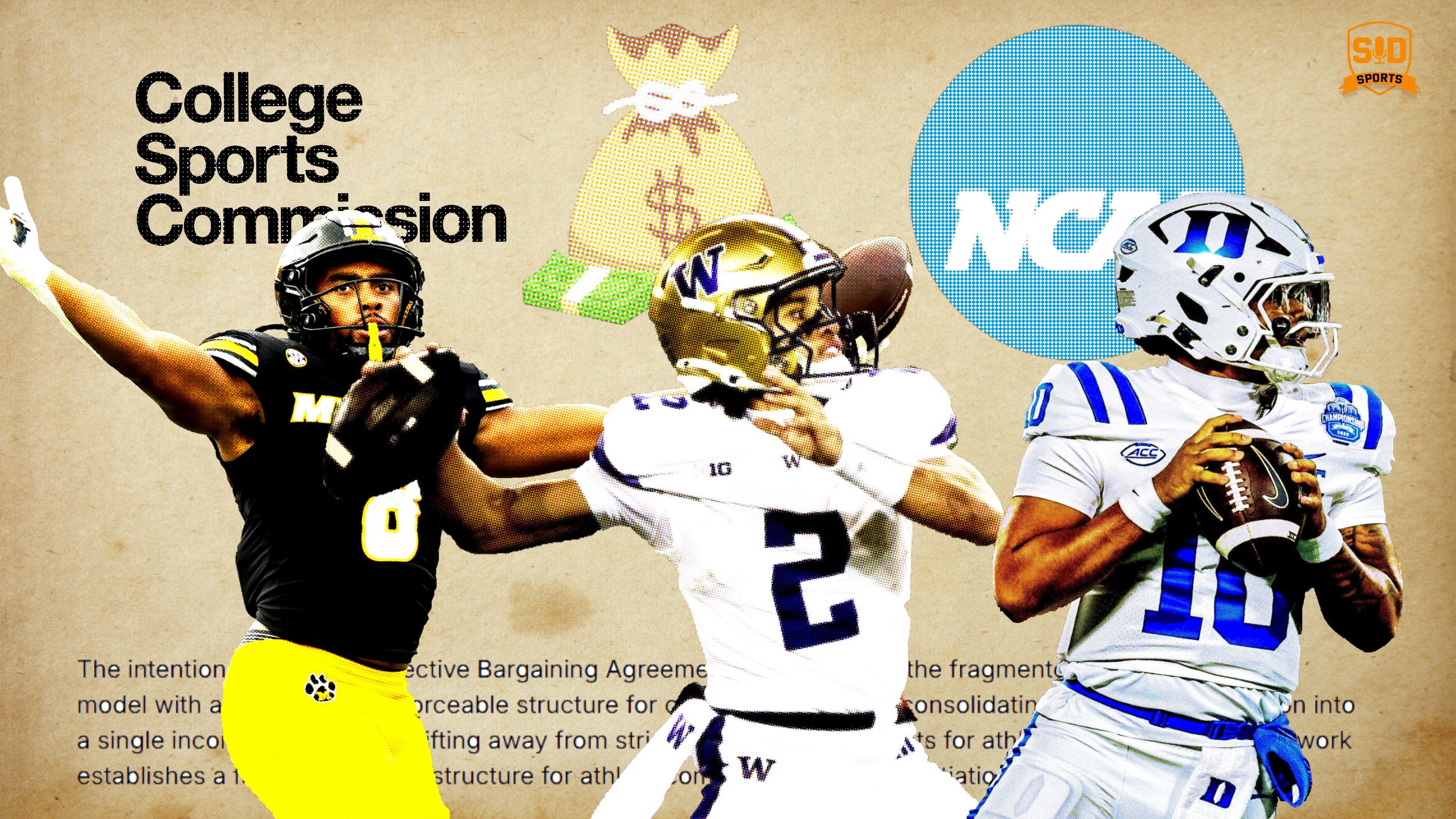
I’m sure you’ve heard many a newsletter, article, coach, podcaster or anyone claim that the modern college football era is the “wild, wild west.” There’s no regulation. Players come and go as they please, always chasing the next paycheck. Boosters like Cody Campbell are touting the NIL budget that they’re spending on players. Routinely, you see rosters valued at much higher than the supposed $20.5 million cap that was established in the House v. NCAA settlement for revenue sharing.
But, things might be changing. This offseason is becoming a major inflection point on how this will all work and operate going forward.
It’s not like NIL-related disputes are anything new. We saw Matthew Sluka opt out mid-season at UNLV in 2024 due to an NIL-related dispute. Sluka later ended up withdrawing from UNLV and using his redshirt that season before transferring to James Madison where he saw limited action in an early-season two quarterback scheme alongside Alonza Barnett III. Sluka’s dispute with UNLV, though, hinged on a verbal agreement, so there was no contract or anything in writing that could lead to a legal battle. He just withdrew and that was that.
The same cannot be said of Jaden Rashada, who was the first major NIL-related dispute. Rashada alleged that Florida’s then head coach, Billy Napier, and his staff promised him a NIL deal in excess of $13 million that was never intended to be honored. Rashada and his representation sued Napier, a staffer and a major booster, alleging fraud in the purported NIL deal to entice him to join the university under false pretenses. The case has a tentative trial date for this summer.
More on the Rashada suit:

Until this offseason, that was the major extent of the NIL and player payment issues. Then, House v. NCAA came in and opened up direct revenue-sharing between universities and athletes based on media rights and other Name, Image and Likeness provisions.
Now that the season has come to a close, all the attention is on the off-field matters like the transfer portal, recruiting and business-related topics of roster construction. With a year of the House settlement under everyone’s belts, it’s supposed to get easier, right?
Wrong.
Everything kicked off with then-Missouri defensive end Damon Wilson II getting handed a lawsuit from his former school, Georgia, seeking $380,000 in damages due to his entering the transfer portal at the end of the 2024 season, per The Athletic.
We saw almost the same thing play out months later when Washington quarterback Demond Williams Jr. indicated his intent to enter into the transfer portal, only for Washington to refuse to post his name into the portal, citing a signed contract between the Huskies and Williams indicating Williams would return for 2026. The mess that followed included Williams’s agent dropping him before Williams ultimately pulled his name from the portal and returned to Washington.
It seemed like an early win for contract enforcement. Enter Darian Mensah. On the last day the portal was open for players to enter their name in, Duke’s quarterback tossed his hat into the ring with his eyes likely on South Beach and Miami. Ahead of the final posting deadline to enter players into the portal, Duke sued their quarterback alleging a breach of contract. The contract stipulated all disputes head to arbitration, according to Front Office Sports, but Duke filed the lawsuit seeking an injunction to prevent Mensah from even entering the portal.
With the lawsuit pending, Mensah was ruled to be able to enter into the portal, but he would be unable to sign until a judge ruled on a possible injunction. Mensah and Duke would settle just under a week later and the quarterback has since enrolled at Miami.
That quick fire recap shows that this is a major issue that isn’t going away: NIL and revenue sharing contract disputes are here to stay.
Looking at the deals (again, I am not a lawyer, nor did I attend law school aside from an undergrad and graduate-level sport law class), I see two main things popping up.
First, the suits about compensation. That’s what we saw with Sluka and Rashada and was the more typical issue pre-House. These ones, for all intents and purposes, are typical contract-related suits. What was promised and agreed upon in the deal? Were those compensation amounts honored? For Sluka, everything was verbally agreed upon and unenforceable, so there was no legal recourse. Rashada’s suit has continued because of the evidence of unfulfilled promises.
The others fall in the second category of schools attempting to use revenue sharing contracts to lock athletes into competing at their schools. This form is more what I’m interested in.
As reported in Extra Points by guest poster Kristi Dosh, there are serious issues with schools pursuing that. Dosh analyzed three revenue sharing contract templates from Minnesota, Purdue and Washington to see what provisions were common across them. In terms of entering students into the transfer portal, Dosh noted that only Purdue had a provision allowing the school to deny entering an athlete into the portal and that the athlete cannot accept any revenue sharing or NIL funds from their new school for the duration of the contract. Dosh did state that, “although my interpretation is that the Washington and Minnesota contracts effectively accomplish the same thing, the wording isn’t as clear and explicit as Purdue’s.”
Even worse, though, is the exact copy of Williams’s contract that was published by the Seattle Times. Section 8 of the deal states that “The Parties understand and expressly agree that the Consideration is not provided in exchange for the Student-Athlete’s commitment to participate in the Institution’s Intercollegiate Athletics Program (i.e., not ‘Pay-for-Play’).”
Hmm, that’s not what Duke and Washington were trying to do. In fact, the contract explicitly states that it is not a pay-for-play deal and the contract does not compel the athlete into participating in their sport at their university.
So, how were Duke and Washington able to start to pursue legal avenues with that contract? Your guess is as good as mine.
Now we’ve reached the big question time: what does this mean going forward?
Unfortunately, I don’t have that answer. Nor do I think anyone does, if we’re being honest.
One thing is clear to me: schools will not be able to legally enforce these revenue sharing deals to keep athletes in their programs. The contracts, provided they follow a similar template to the one the Big Ten distributed and used by Washington, explicitly state that is not the case with a “No Pay-For-Play Clause.”
So what’s the other option, then? In my mind, that’s collective bargaining.
Now, let’s take a step back. Collective bargaining? That’s a phrase with a lot of oomph and energy behind it. It means even more fundamental changes to how college athletics operate. It will most certainly alienate more traditionalist fans as the college athletics landscape further takes the form of a professional league.
But it also may be our best shot and making this thing work going forward.
Let’s dispel some major qualms first and foremost. First, a collective bargaining agreement (CBA) does not inherently make college athletes employees of their university. Certainly, a CBA could make that happen, but it is not a requirement. Yes, it would mean that college athletes across a plethora of sports in massively different situations across all 50 states would have to organize. But we saw the athletes organize for something like EA’s College Football series, where the athletes joined a collective led by One Tree Partners to sign their rights en masse to be included in the game. Second, it isn’t going to mean that athletics are splitting off from colleges. Athletes will almost assuredly need to maintain academic progress standards and schools will be judged by graduation success rate and other academic standards.
Also, a CBA is light years away. Well, maybe not light years, as college athletics have been moving at roughly the speed of light since this newsletter launched in 2023. But there is already groundwork being laid.
AthleticDirectorU, a site aimed at empowering the up-and-coming future athletic directors, has already looked at what a CBA would be. And they assessed that a CBA would resolve many of the issues that are current there. Just opening up a collective bargaining process allows the athletes to have a say in the matter. It cuts down the amount of lawsuits exponentially because the athletes won’t be trying to go against a system they feel is treating them unjustly, or schools won’t be trying to bind athletes to their programs to keep fan interest afloat. Instead, both sides will have ownership of the college athletics landscape.
We’ve even seen a draft of a CBA floated around by Athletes.org, who is seeking to be the first multi-school union of sorts. They’re doing things like Athlete Report Cards, which rank schools based on how their athletes feel about how the department values and takes care of them, similarly to the NFLPA’s Report Cards on each franchise. With a board that has plenty of sports labor experience, including backing from the presidents of the NBAPA, NFLPA and WNBAPA, they’re probably the best suited to pursue this route.
A 38-page draft of a CBA has been published by the Athletes.org team in hopes of starting conversations about organizing and collective bargaining between schools and athletes. It includes provisions such as:
Establishing firm transfer portal and tampering rules;
Establishing an Injured Reserve that would further protect athletes with long-term injuries, including ones that end a playing career with continued grant in aid and medical access;
Giving all athletes five years of post-graduation medical coverage for those that do not go on to play professionally;
A maximum of five years’ eligibility from the athlete’s first enrollment.
Reading through the entire document, it’s not a wild ask from the players. Some of these provisions, like the post-graduate medical coverage, is already done by some schools. Notre Dame, for example, offers their athletes medical coverage for 10 years following graduation.
But, most importantly, it creates a level playing field. There’s just one document and ruling that schools, agents, athletes, and governance organizations have to follow. It removes the patchwork nonsense we have now of the NCAA bylaws and the Alston ruling and the House settlement and hundreds of other far-flung documents that compliance officers have to keep in mind nowadays.
With that comes greater opportunities for enforcement and we wouldn’t have to figure things out on the fly like athletic departments have since House. And, it will, as I already mentioned, cut down the flow of lawsuits.
We’ve already seen lawsuits mounting based on the actions of players and schools in a post-House world. We don’t know how the current enforcement will be, as the newly made College Sports Commission has begun their first investigation into LSU. The new oversight organization is being tight-lipped, and all we know is that the investigation is not into the football team and is looking at unreported NIL deals.
That all would be continued under the CBA, provided similar terms to the one published by Athletes.org is agreed upon.
Like I said, a CBA is far away. Athletes.org only represents around 5,000 total athletes. Other organizations, such as the College Athletes Players Association and their 17,000 members, and other campus-led efforts have the athlete base fractured. For meaningful collective bargaining to occur, a majority of the NCAA’s over 550,000 athletes would have to organize under one roof. That’s a massive undertaking that’s unlikely.
But what alternatives are there? Legislation has stalled and has barely gotten off the floor. The House vote on the SCORE Act was canceled and not rescheduled. President Trump seems more focused on executive orders regarding the Army-Navy game than the promised one to overhaul college athletics. The SAFE Act hasn’t gotten out of committee. The NCAA is waiting for the federal government to come in and decide how this all works. Something has to give.
With all of this, it’s clear the legal battles are going to continue onward. Each school has a different contract and a different interpretation of the contract that they have athletes sign. And, without collective bargaining, there isn’t much that is going to change.
But, I can’t end this massive edition on a note like that. We have to have some answers, right? Well, here’s what I’m left with.
First, the lawsuits will continue. We haven’t even covered things like eligibility, redshirts and other suits that are coming down the pipe. But I’m closely watching what happens in the Damon Wilson-Georgia case to see if transferring athletes will need to pay damages for breaking contracts with their prior schools.
Second, things are being reigned in. With these revenue sharing contracts having specific clauses on termination, it’s clear that there are repercussions for breaking these deals. While they can’t explicitly force an athlete to stay at a school, we can see a situation like with Demond Williams Jr. at Washington where staying may be in the athlete’s best interest. And, the College Sports Commission is embarking on their first investigation. Seeing how they handle it and how they seek to keep programs on-point will tell a lot about where we’re going in the future.
So, yes, the NCAA and its schools are getting their teeth back. They’ve netted a win in the Williams saga, but were dealt a loss in the Mensah saga. That’s still a better rate than months prior. We’re approaching a balance that feels more sustainable. There’s just going to be a lot of uncomfortable things in the meantime.
Have any questions, ideas, article pitches, or information? With the new Substack features, you can directly message me! Hit the button below to send me a message, or reach out via email to griffin@sid-sports.com, or find us on your favorite social media platform like Facebook, Instagram, Substack Notes and Bluesky.
Great read! Combined with legal disputes over eligibility, this is going to be a ticking time bomb for college sports. Can't really see a way forward without a CBA.